Journal · Choosing your glasses ·
Photochromic lenses: what they do in the Douala sun
Photochromic lenses darken on their own in the sun and clear again indoors. Many people call them transition lenses. They save you carrying two pairs, prescription glasses and sunglasses, but they have limits, especially in a car. They can be made for most prescriptions, including progressives.
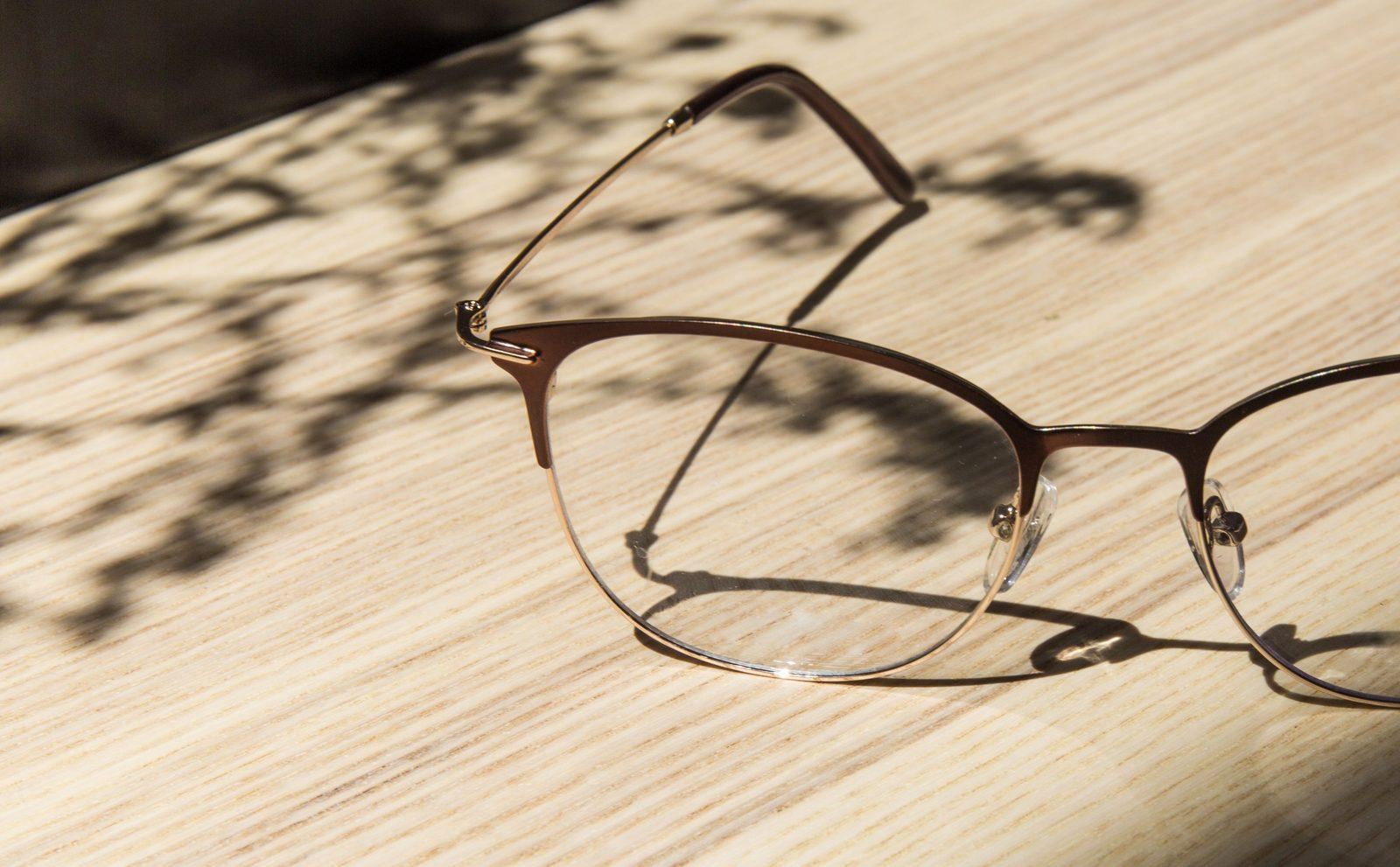
How do photochromic lenses work?
Photochromic lenses contain special dyes that react to ultraviolet (UV) light. The American Academy of Ophthalmology (AAO) explains this on its page about the pros and cons of these lenses: they darken when the light is bright and clear up when it is not.
In everyday talk, people say transition lenses. It has become the common word, a bit like calling every stock cube Maggi. Here we simply say photochromic lenses, whatever the brand.
What do they offer in the Douala sun?
- One pair that works indoors and outside.
- UV protection all the time: no forgetting your sunglasses for a quick errand outside.
- One pair is easier to keep track of than two.
- They come in many styles and colours and work with most prescriptions, including bifocals and progressives.
- You may not need to buy a separate pair of prescription sunglasses.
The AAO lists several advantages, and they make sense to anyone whose day moves between the office, the street and the back of a bike:
Why protect your eyes from UV, even when it rains?
Because clouds do not block UV light. The AAO makes the point on its page about the sun, UV light and your eyes: the sun's rays pass through haze and clouds. The same page says UV light can harm your eyes and raise the risk of cataracts, and advises sunglasses that block 100% of UV, or are marked UV400.
In the middle of the Douala rainy season, it can feel as if the sun has gone on leave. The UV rays, meanwhile, keep working full shifts.
What are their limits?
- In a car, the windows block UV light, which can stop the lenses darkening fully. Some lenses are designed to work better in cars, so ask about them.
- Quality varies: some darken more than others, and some take longer to adjust, for example when you step indoors.
- They adjust more slowly in cold weather. In Douala, the only cold most of us meet is an over-air-conditioned office.
The AAO is clear that these lenses do not do everything. These are the limits it names:
Photochromic lenses or proper prescription sunglasses?
It depends on your day. If you are in and out all day, a photochromic pair is handy. If you drive a car a lot, lenses that barely darken behind the windscreen can disappoint: prescription sunglasses, or photochromic lenses designed for cars, may suit you better. On a motorbike, with no windscreen, the lenses get the UV directly.
The right choice always starts from your prescription. The eye test comes first; the type of lens comes after. This article is general information and does not replace an examination: only an examination shows what your eyes need.
Asking for photochromic lenses at Jackson Eye Clinic
The clinic is run by Fon Jackson Ndeng, optometrist. An eye test costs 2,000 FCFA, with or without an appointment. Frames run from 5,000 to 50,000 FCFA. The price of photochromic lenses depends on your prescription and the type of lens, so ask for a quote on WhatsApp on 698 18 30 54, with a photo of your prescription if you have one.
We are in Kotto-Bonamoussadi, Douala V, between Pharmacie Kotto and Santa Lucia, opposite the Visite Technique. Open Monday to Friday from 7:30 to 17:00 and Saturday from 8:00 to 17:00, closed on Sunday. You can also call 674 78 53 15.
Common questions about photochromic lenses
Do photochromic lenses protect against UV? According to the AAO, they give UV protection all the time, even when they are clear.
Do they darken in a car? Often not fully, because car windows block UV, the AAO explains. Some lenses are made to work better in cars.
Can I have them as progressives? Yes. The AAO says they work with most prescriptions, including progressives.
How much do they cost? It depends on your prescription and the lens: ask for a quote on WhatsApp.
This article gives general information. It does not replace an examination of your eyes.