Journal · Advice ·
Ophthalmologist in Douala or optometrist: who to see
An ophthalmologist is a medical doctor who specialises in eyes: they diagnose and treat eye disease and perform surgery. An optometrist tests your sight, prescribes glasses and spots the signs that need a medical opinion. An optician makes and fits the glasses. For glasses, start with an eye test; for eye disease or an emergency, you need an ophthalmologist.
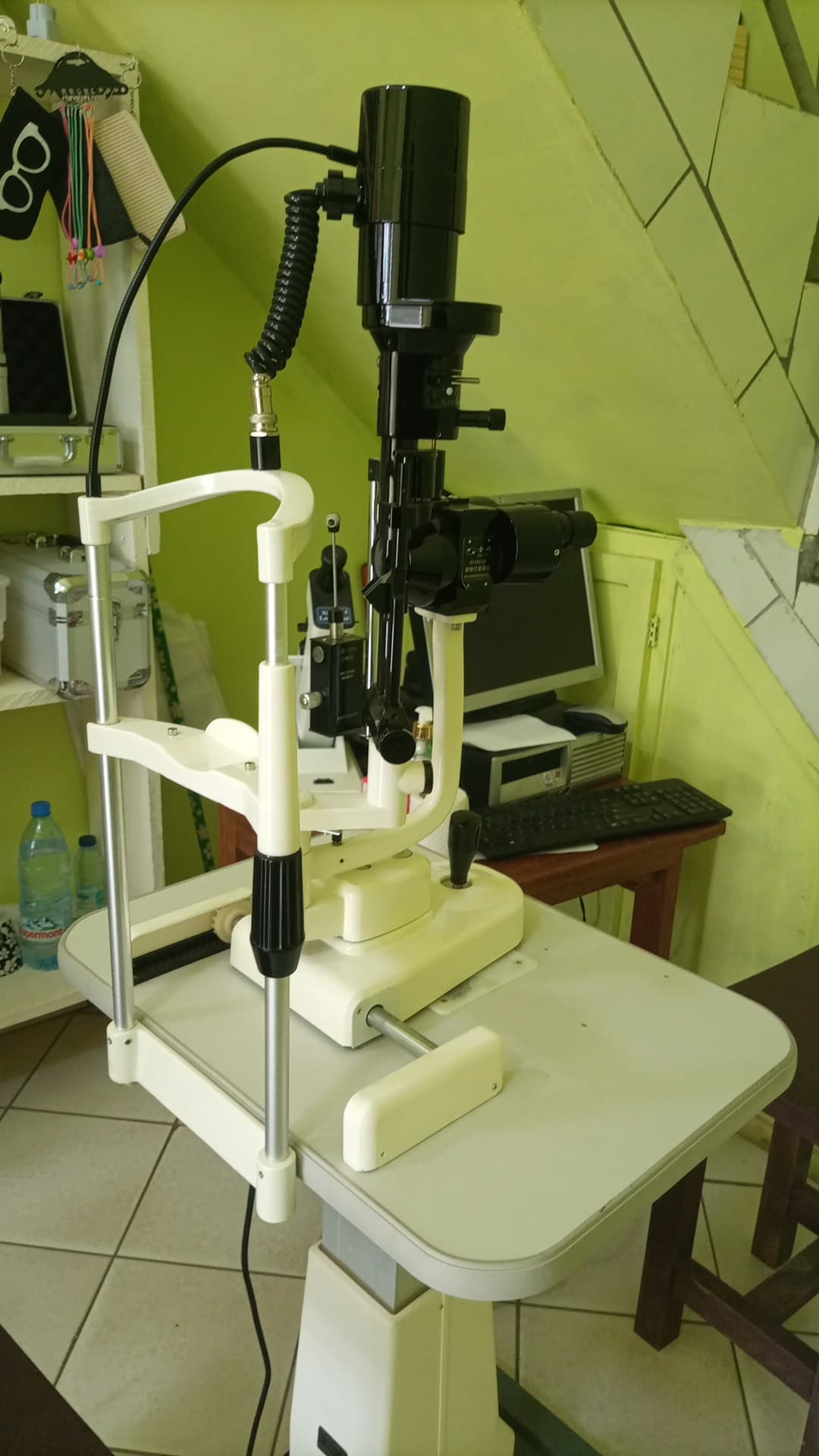
Ophthalmologist, optometrist, optician: who does what?
- An ophthalmologist is a medical doctor. After many years of training, they diagnose and treat all eye diseases, perform eye surgery, and can prescribe glasses too.
- An optometrist is not a medical doctor. They provide everyday vision care: they test your sight, prescribe corrective lenses and detect some eye problems, so they can refer you to an ophthalmologist when needed.
- An optician makes up, fits and adjusts glasses from a prescription. They do not diagnose or treat eye disease.
They are three different jobs, and they often work together. The American Academy of Ophthalmology (AAO), the professional body for eye doctors in the United States, describes them like this:
Why does everyone say "ophthalmo"?
Because in Douala, as in many places, "ophtalmo" has become the word for anyone who looks after eyes. Online directories happily list opticians, optometrists and ophthalmologists under the same heading.
The exact word still matters, because it tells you what that person is trained and allowed to do. The scope of each job can also differ from one country to another: the AAO's description applies first to the United States. If in doubt, just ask: "Are you an ophthalmologist, an optometrist or an optician?" Nobody will be offended, and it is quicker than saying all three titles in one breath.
Who should you see for glasses or a sight check?
To find out whether you need glasses, you need an eye test, which both optometrists and ophthalmologists carry out. Blurry at a distance, holding your phone at arm's length to read, eyes tired after a day on screens: this is the most common reason people come in.
The World Health Organization (WHO) lists refractive errors, such as short sight or presbyopia, among the leading causes of vision impairment worldwide, and notes that two in three people in low-income countries who need glasses do not have them. In plain terms, a lot of people see badly for a reason that can be corrected.
The AAO also recommends a complete eye examination by an ophthalmologist around age 40, even without symptoms, because some diseases start quietly. Ask us whether that referral makes sense for you. The usual order is simple: test first, prescription next, glasses last. Picking a frame before you know your prescription is like buying shoes before you know your size.
When do you need an ophthalmologist?
- An eye test has found something that needs a medical opinion.
- You have diabetes or high blood pressure: the AAO points out that both can affect the eyes.
- Eye disease runs in your family.
- Someone has mentioned cataract, glaucoma or a retina problem, all causes of vision impairment named by the WHO.
You need an ophthalmologist once the question goes beyond measuring your sight: an eye disease to diagnose, a treatment, an operation. Some common situations:
What should not wait
Sudden loss of vision, an eye injury, a chemical in the eye or severe pain do not belong in an appointment two weeks from now. Come to the clinic straight away during opening hours, or go to the nearest emergency service.
This is not the moment to compare the titles on signboards. In that situation, the right professional is the one you can see now.
This article is general information. It does not replace an examination: only an examination shows what your eyes need.
At Jackson Eye Clinic: what we do
The clinic is run by Fon Jackson Ndeng, optometrist. It is not an ophthalmology practice, and we would rather say so plainly. We test your sight, prescribe your glasses and make them on site. If the examination shows you need an ophthalmologist's opinion, we refer you to one and explain why.
A consultation costs 2,000 FCFA, and frames run from 5,000 to 50,000 FCFA. The lens price depends on your prescription, so you get it as a quote before you order anything. Our published prices are on the Prices page of this site.
We are in Kotto-Bonamoussadi, Douala V, between Pharmacie Kotto and Santa Lucia, opposite the Visite Technique. The clinic is open Monday to Friday from 7:30 to 17:00 and Saturday from 8:00 to 17:00. You can be seen in English, French or Pidgin. For a question, message us on WhatsApp on 698 18 30 54. And if you call us "ophthalmo", we will still answer, with a gentle correction.
Common questions: ophthalmologist or optometrist
Is an optometrist a doctor? Not a medical doctor. An optometrist is a vision care professional; an ophthalmologist is a medical doctor.
Do I need an ophthalmologist to get glasses? Not necessarily. An optometrist can test your sight and prescribe glasses. If they see a sign that needs a medical opinion, they refer you to an ophthalmologist.
Can an optometrist operate on a cataract? No. Eye surgery is done by an ophthalmologist.
How much does an ophthalmologist consultation cost in Douala? Fees vary from practice to practice, so ask them directly. At Jackson Eye Clinic, an eye consultation costs 2,000 FCFA.
This article gives general information. It does not replace an examination of your eyes.