Journal · Glasses ·
Cheaper glasses in Douala: where to save, where not to
To pay less for glasses without regretting it, save on what is a matter of taste, not on what corrects your sight. The frame and the lens extras leave real room to save; the eye test and lenses made for your prescription do not. At Jackson Eye Clinic in Douala, frames run from 5,000 to 50,000 FCFA.
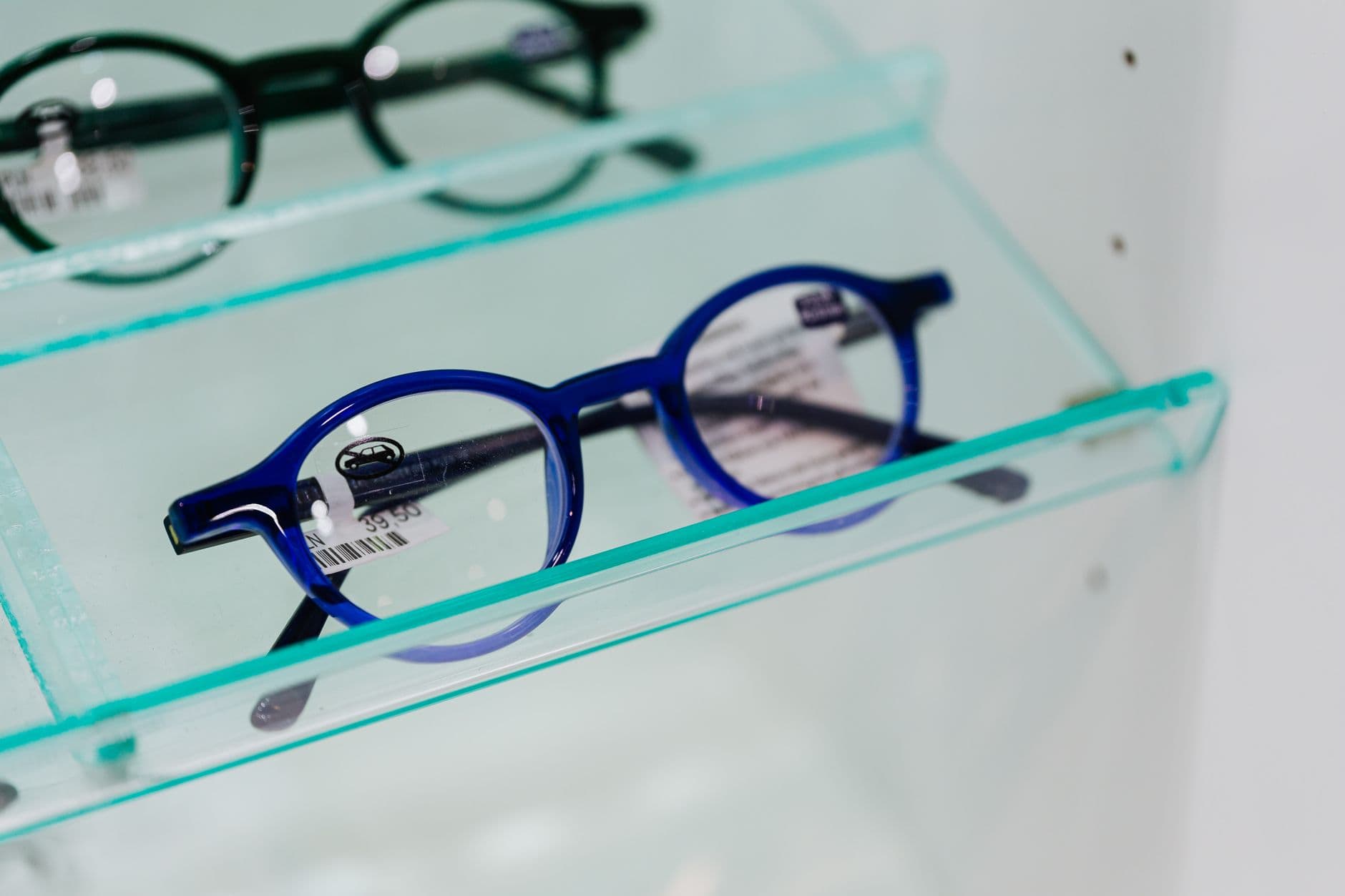
Where can you safely save on glasses?
- Pick the frame that fits your budget, then check it sits well on your nose and behind your ears.
- Only pay for the lens extras your days actually need: anti-reflective, blue-light filters and lenses that darken in the sun are options, not obligations.
- If your current frame is in good shape, ask whether it can take new lenses.
- A loose arm or a damaged nose pad? Ask whether it can be repaired before you buy a whole new pair.
On the frame, first of all. It holds your lenses, but it corrects nothing: with the same lenses, a 5,000 FCFA frame and a 50,000 FCFA frame let you see exactly as well. The difference is material, finish and style.
Where you should not cut corners
- The eye test: it measures your correction, one eye at a time. Without it, everyone is guessing. At the clinic, a consultation costs 2,000 FCFA.
- Lenses made for your prescription: their price differs from one person to the next, which is why you get it as a quote.
- Measurements: the lenses have to sit right in front of your eyes, and that is measured on you, not on a photo.
On anything that touches your sight: the eye test, the lenses and how they are fitted. Those decide whether you see clearly, and so whether you will still be wearing your glasses next week.
Glasses sold on the street: a false economy
They are cheap at the moment you buy them, but nobody measured your sight before selling them to you. In 2025 the Ordre national des opticiens du Cameroun (ONOC), the national body for opticians in Cameroon, warned against glasses sold on the streets of Douala: often counterfeit and made outside any standard, they can harm your sight. The ONOC also pointed out that practising optics in Cameroon requires authorisation from the Minister of Public Health.
If a vendor invites you to try a pair by reading the billboard across the road, remember he is selling glasses, not an eye test. The billboard has no training in measuring sight either.
What about ready-made reading glasses?
They can help in a pinch, but they are not made for your eyes. A ready-made pair has the same correction on both sides: it takes no account of a difference between your right and left eye, or of astigmatism.
With age, many people find it harder to see up close. This is called presbyopia. According to the World Health Organization (WHO), it is the leading cause of poor near vision worldwide, and in several regions of sub-Saharan Africa more than 80% of near-vision needs go unaddressed. Before buying a random pair, have your sight measured: the test will show whether a simple pair of readers is enough for you.
Borrowing your neighbour's glasses at church is a very popular stopgap. Your neighbour would quite like them back before the last hymn.
How to compare prices properly
Compare like with like: the same prescription, line by line, frame, lenses and extras. A single total with no breakdown cannot be compared with anything, and a pair that is cheaper because it skipped the eye test is not really cheaper.
It is worth the effort. The WHO counts correcting sight with glasses among the most cost-effective health interventions, and estimates that in low-income countries two in three people who need glasses do not have them. The best value glasses are the ones you actually wear. The pair asleep in a drawer costs full price for an excellent view of your socks.
This article is general information. It does not replace an examination: only an examination shows what correction you need.
Glasses that fit your budget at Jackson Eye Clinic
The clinic is run by Fon Jackson Ndeng, optometrist. We test your sight on site, and if the examination shows you need an ophthalmologist's opinion, we refer you to one. A consultation costs 2,000 FCFA. Frames run from 5,000 to 50,000 FCFA: tell us your budget and we will show you what fits it. The lens price comes as a quote based on your prescription, before you order anything.
We are in Kotto-Bonamoussadi, Douala V, between Pharmacie Kotto and Santa Lucia, opposite the Visite Technique. The clinic is open Monday to Friday from 7:30 to 17:00 and Saturday from 8:00 to 17:00. You can be seen in English, French or Pidgin, and we accept ACTIVA insurance.
For a quote, message us on WhatsApp on 698 18 30 54 with your prescription, if you have one, and your budget. Our published prices are on the Prices page of this site. There is nothing awkward about naming your budget up front: it saves everyone the most time.
Common questions about cheaper glasses
Does a cheaper frame mean worse vision? No. The lens corrects your sight. The frame changes comfort, strength and style.
Can I keep my frame and just change the lenses? It is often possible if the frame is in good condition. Bring it in and ask.
Are glasses sold on the street dangerous? Cameroon's national body for opticians, the ONOC, warns against them: they are often counterfeit and made outside any standard. Have your sight measured and buy from an authorised professional.
How much do glasses cost at Jackson Eye Clinic? Frames run from 5,000 to 50,000 FCFA, a consultation costs 2,000 FCFA, and the lens price is given as a quote.
This article gives general information. It does not replace an examination of your eyes.